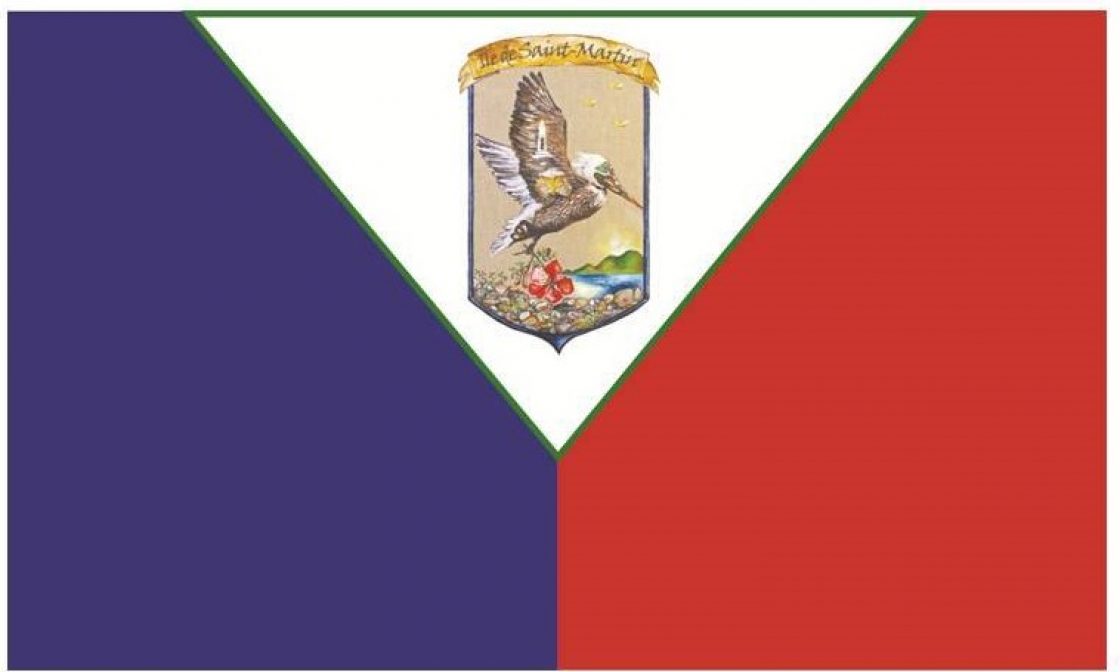
Starting with a digression…
It was said on some US national TV’s, about President Trump… considering his response to the generalised protests that followed the public murder of Georges Floyd, that he was
swimming against the tide of history and running against the current of changes,
Because :
His answer to police brutality was more police force and « law and order ».
His answser to the « topling » of statues of those who fought against the Union for the purpose of perpetuating slavery, was to promote the heroism of those known ennemies of the United States and protect that «culture and history ».
His answer to the ever widening wealth gap between the haves and the have nots, was to give even less to the poor and even more to the rich. (to the point that a few honest rich people could say, we don’t need more money, we can afford more taxes).
The civil rights movement did bring about some positive results throughout decades of struggles, swimming with the tide of history… but we are far from any acceptable level of social justice.
It is said that the covid health crisis has taken a much heavier toll from blacks and browns, including the Amerindians, in America
It is said that employment for whites, starts to improve long before that of minorities, in America
It is said that police profiling is a real reality up to today, not only in America, but elsewhere around the world.
But the 45th does not take these facts into consideration in his speeches, less in his actions, that is why he is considered to be « swimming against the tide of history ».
But « History » is more than his story, your story or mine.
It emcompasses those age-old stories, told and written about, mostly by the beneficiaries of evil systems. But nowadays, the victims of atrocities, more and more can speak up and speak out, and their version of the same « accident » is quite different than that of the perpetrator…and their version rides on the tide of history.
The murder of Georges Floyd, as witnessed by a worldwide audience, brought a new acuteness to the consciousness of the lack of equity and of the injustices vis a vis blacks, browns and other minorities, not only in America but also in many countries…that new consciousnes too, goes with the tide of history.
We cannot blame all whites for the privileges that they inherited from history, but it would be helpful for all, including for themselves, if only they admitted the facts, stopped denying the reality and started swimming with the tide of history.
We too, on this small Island of Saint-Martin, as a people, as a nation (people connected to a land) in the making, as a distinctive fraction of humanity, we too have a story, a distinctive history, a specific cultural reality. As such it is good that we try to distinguish the general trends, the mainstreams, the underlying tide of history that we are living through.
Joe, in 1834…
In 1834, a black personnage called Joe, who is 50 years old, who lived all his life on Saint-James Estate, can remember, that when he was 10, in 1794, slavery was abolished a first time on the french side (and all french colonies).
And he was 18, when slavery was reimposed in 1802 by « Napoleon the great ».
And Joe could not comprehend this inhumane and unjustifiable decision. What could have gone through their heads to implement this abomination…
but they had one of the most powerful military forces in Europe.
Little could he know that Napoleon’s wife was the daughter of a rich and influential plantation owner in Martinique.
Little did he know that revolts were raging on hispaniola. Napoleon needed to regain control of the biggest and riches of his colonies, « Saint-Domingue ».
Little that Napoleon knew of Toussaint Louverture, allegedly pronouncing these words « « En me renversant on n’a abattu à Saint-Domingue que le tronc de l’arbre de la liberté des noirs qui repoussera par ses racines car elles sont profondes et nombreuses. » (« When I was overthrown, only the trunk of the tree of black freedom was cut down in Santo Domingo, which tree will grow back through its roots because they are deep and numerous. »).
Ayiti eventually became the first « black republic » on January 1st 1804.
At that time « they » had one of the most powerful military forces in Europe.
Today (1834), Joe is 50, and new hope energises him and all of the enslaved, because they can litterally see the lights of freedom from slavery, as they look at the stars in the skyes in the north and the fires on the eastern beaches of Anguilla.
Not so long ago slavery was abolished in the british colonies (which Anguilla was).
Let’s try to put ourselves in their heads (they surely had no shoes for every purpose).
As they surely felt at that time, the tide of history will, sooner or later, bring about citizenship for his ethnic group…that was surely the biggest of their dreams.
Joe in 1848…
He is 64 when the news is officially announced on that glorious day of May 28th 1848…slavery is officially abolished in the french colonies, thus on saint-martin french side.
And I can hear old Joe explaining that the official abolition of slavery was a great step in the right direction but was surely not the end of our struggles.
And he had this advice for his listeners :
first of all, let’s not get overjoyed. we must remain vigilant because this is the second time that slavery is abolished and we don’t know what goes through the heads of the powers that be in Basse-Terre or Paris. (As a matter of fact some newly freed people left the Island indefinitely, to Trinadad and elsewhere, in fear of the french reimposing slavery again).
Secondly, we are citizens but we now have to sustain ourselves. We must organise to feed ourselves. Solidarity through jollification and swapping of fish or shrimp for banana and sweet potato, must become common practices.
Thirdly, the Saint-Martin english being the only common language on the island, let us use it to our advantage ; That created conditions for cultural harmonisation and development.
By that time, old Joe and many black Sin martiners owned the « piece ah property » that they bought or « inherited » from the former plantation owners, some of which had left because they were promised money for the « loss of assets » due to abolition. Others who remained had to find common sense agreements with the former free work force, that they still needed…
And old Joe, who was considered one of the wise, because of the vast knowledge and life experience that he had, continued until his death to tell the stories of the 1820’s and 30’s and 40’s…a source of richness for his listeners.
Here are some bits and pieces of stories that he could have told.
(Which I found in « Bulletin de la société d’histoire de la Guadeloupe
Denise Parisis et Henri Parisis
Le siècle du sucre à Saint-Martin français)
(My own english translation)
SAINT-JAMES SUCCESSIVE OWNERS
1) The first mentioned owner is James LEE, aged 61 in 1772. He is a native of Cork, Irish, Catholic. Curiously enough, he is naturalized French, Dutch and Danish (he most certainly wandered around the Caribbean islands before settling in Saint Martin).
2) At his home, Belly, a mulater from Barbados, and 3 young children. The plantation is already a well-established sugar factory with 12 squares of cane. It probably started around 1768. He died in May 1795, a few days after the arrival of the French revolutionaries. His will is contested because some codicils were registered under « enemy authorities ».
3) The legatee is Michael HANNAH, whose wife is Mary GIBBES.
They have three children, James-Lee Hannah, who will become a medical doctor in London, Laetitia Hannah and Catherine-Margaret Hannah. The will will will only be homologated on oct 10th 1800 by the Civil Court of Guadeloupe. The plantation had been sequestered like many others from 1795. Abraham Lee, a black son of James Lee, was the accountant. Michael Hannah manages the property from 1801 to 1819, date of his death on July 26th. After his death, his surviving children kept the plantation for a year, then it was put up for auction at the end of 1820. It was damaged by the cyclone of September 1819.
4) Ann Desmonts, widow of DURAT, buys it. She already has Saint-Jean and Mount Fortune, two other sugar factories very close to Marigot. Then, one of her sons, Jean-Sébastien de Durât takes it over. Very quickly, each property specialises: Masters home in Morne Fortune, manufacture in Saint-Jean, and crops where the soil is easier. Thus, Saint-James became uncultivated from 1834. After the abolition of slavery in 1848, Saint-James was divided into plots of about twenty ares, which made it the first black district of Saint-Martin.
There is where Joe Bought a plot and became a proud land owner.
Major changes began to take place as of the 1830’s
Hereafter is an account that concerns Spring Estate in Marigot.
SPRING ESTATE , MARIGOT .
… In March 1835, Daniel French and his wife Eliza-Mary Cock took over the management of the Ann-Mary sugar factory, which they owned for a quarter. Mortgages encumbered the plantation but in May 1835, the mortgage on Ann-Mary was transferred to the « Bethleem » sugar factory in the Dutch zone. Financial difficulties were general on the island at that time: the situation was bad for sugar products in the French West Indies, but Saint-Martin suffered particularly from a very important marronnage to the nearby English islands, which had abolished slavery since 1833. The crisis was so acute that in 1841 the sugar producers demanded the abolition of slavery on the island’s territory alone.
The French couple is catholic, as well as the Morel de la Colombe (their neighbours at « Diamant » in Marigot); they are probably the only important owners to be of this religion; the big mansion of « Concordia » is used as a church around 1840. Although many sugar factories in Saint Martin had to close down, in 1847, « Ann-Mary » continued to roll the cane; for the year 1846, the production amounted to 50 tons of sugar (9.6% of the whole French part), 919 hl of rum (64%) and 29.8 hl of molasses (4.3%).
The abolition of slavery in 1848 accentuated the difficulties. The Saint-Martin planters drafted a petition in 1849. Daniel French is the first signatory. «… Crushed by the dreadful drought of the previous ten years, by the absurd demands of the laws of July 1845, we found ourselves on the day of emancipation without any means of existence, without any resources.
The newly emancipated all left their homes, abandoned farming, to go to the Dutch part of the country to collect salt. Can we blame them? Free, they were going to get a salary that we could not give them… we were crushed by taxes; with 160 barrels of sugar, we were condemned to pay 14,000 F in taxes… The administration of Guadeloupe, which never visits our little country, taxes us automatically… intensive agriculture is impossible; it must be abandoned… »
This petition concluded by calling for the purchase by France of the Dutch part;
Their request was not t…
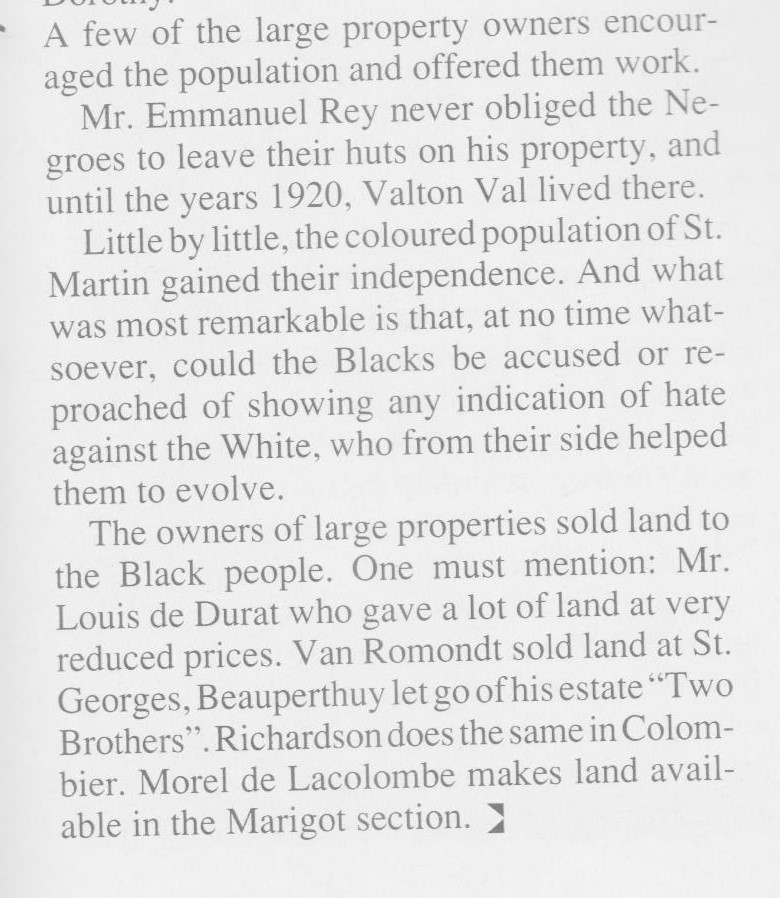
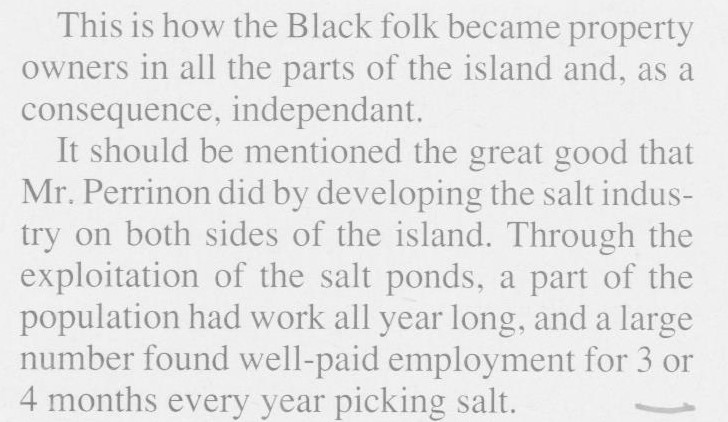
And from Joseph Emmanuel Richardson we learn:
All of the above leads me to these personal conclusions :
The tide of history on this island, in the context of those times, because of the « insistence and persistence » of black enslaved, brought about more dignity and human rights to those who were dehumanized. Although they were physically, mentally and spiritually crushed to ashes by the evil system, they had managed to keep a small flame of hope alive, and now the freedom breeze was gently blowing and igniting the fire of new life, new strength, new wealth… but the struggle is far from over.
The Plantation owners themselves, as of the 1830’s on Saint-Martin, found it more beneficial to pay their« slaves » rather than beat them up, because of too much revolts and « marronage ». They needed to keep whatever workforce was still available.
The french abolitionists represented by Victor Schoelcher and « la société des amis des noirs » were following the tide of history initiated by blacks. At the least at that time they did not « run against the current of changes ». François-Auguste Perrinon, The mulatoe from Martinique who arrived on the island in 1844 and demonstrated that slavery was an economic aberration, was a friend of Schoelcher.
Old Joe contributed in his way, to the knowledge of the state of the tide of history of his days. Family, friends and neighbours would gather under the mango tree and listen to his stories, as the sun would set, sometimes behind Bluff, other times behind Anguilla.
He lived to witness the abolition law by the Dutch in 1863, which marked the official end of the slavery era on this island. He died in July 64, at 80 years old, under the sweetest mango tree one could imagine and surrounded by majestic flamboyant trees with all the colors of flowers you could think about.
By then and for close to a 100 years or so, the island went in somewhat of a go slow,
a slow motion tide
As a consequence of abolition…
Sugar plantations became fewer.
In 1862, there were only 3 sugar producers, Dormoy and Allaway in Colombier, and French in Marigot (former Lottery, Paradise, Hope, Delight plantations for Dormoy; Union for Allaway; Spring and Concordia for French). A limited revival occurred around 1880 for two estates, Spring in Marigot and Belle Plaine in Orleans. An important modernization allowed the production of rum, which the international economic situation made profitable. Everything stopped at the beginning of the 20th century.
The salt industry employed many people. Many others went to Santo-Domingo to cut cane or to Aruba and Curaçao where the oil industry had developed. Some others went to New-York in pursuit of their American dream. A few made and saved enough money to come back home and build themselves a home for the family.
External forces had little influence on the local way of life.
It is fair to mention some of the more prominent persons who left lasting impressions on the territory.
1 – Charles Daniel Esprit Beauperthuy bka mister Dan, Mayor 1904 – 1919 (15 y) including WW1. He left a numerous descendance. Note : his father was also mayor (1874 – 78)
2 – Louis-Constant Fleming bka constant Fleming, Mayor 1928 – 1949 (21 y), including WW2. He established the border monument. Note : his father was also mayor (1919 – 25)
3 – Fernand Hubert Petit, bka dr Petit Mayor 1959 – 1977 (18 y) including the beginning of the modern era (public electricity, Saint-Martin day, Dona Gale,
first modern complains against Guadeloupe and the State.
… And the tide of history was slow, as shown by demographic evolution.
Year Population
1931 … 5000
1960 … 6000
1980 … 8000
Then things picked up dramatically, becoming a social tidal wave, a change of course and magnitude.
1990 … 28 000 but that’s a next story …
 Organised thoughts - pensées organisées